
Relationships are one of the most beautiful and most challenging parts of being human. The longing to be truly known by another person, to feel safe enough to be fully yourself, to love and be loved without hiding, that is something worth fighting for.

Does This Sound Familiar?
You love each other. But somewhere along the way, the connection started to feel harder to reach. The arguments happen quicker, the repairs take longer, and the distance between you keeps quietly growing.
These patterns are incredibly common among relationships. They are human. And they can change.
Common Reasons Couples Come To Therapy
Couples come to therapy for many different reasons.
Some arrive in crisis. Others arrive simply wanting more connection and more understanding. In both cases, people are searching to feel more deeply connected to the person they love. This is what couples therapy helps each person in the partnership cultivate, it provides a roadmap and tools to turn that longing into a shared reality.
Common reasons couples reach out include:
Feeling disconnected or emotionally distant
Recurring arguments that never fully resolve
Communication that breaks down into defensiveness, withdrawal, or escalation
Loss of intimacy – physical, emotional, or both
Partners feeling unseen, unheard, or unappreciated
Navigating major life changes – a move, a new baby, career changes
Rebuilding after an affair or breach of trust
Wanting to strengthen an already good relationship
Feeling like roommates rather than partners
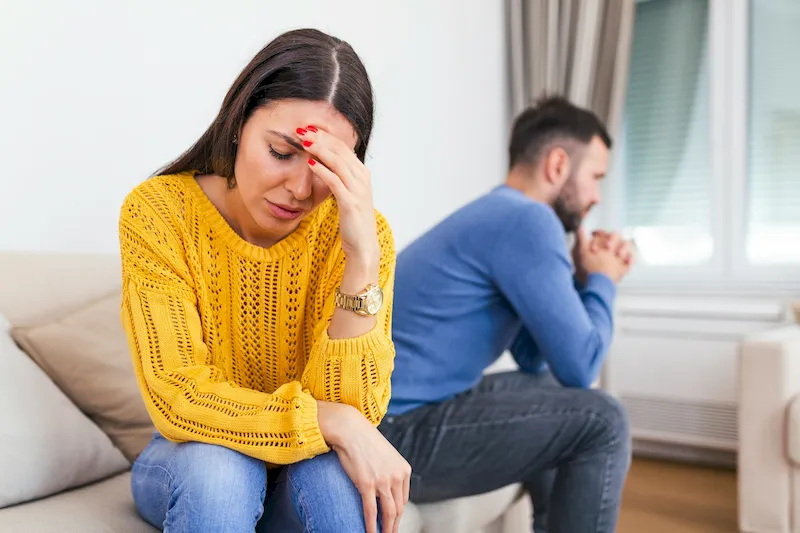
If any of these feel familiar, you are in the right place. Couples therapy is not just for relationships in crisis. It is for any partnership that is ready to do the work driven by a desire to cultivate a stronger connection.
Benefits Of Couples Counseling
The benefits of good couples therapy go far beyond arguing less. When the work is done well, something shifts at a much deeper level.

What couples often experience over the course of therapy:
Clearer, more compassionate communication.
Learning to express what you actually need, and to truly hear what your partner is saying underneath the words.
A decrease in the Four Horsemen.
Criticism, defensiveness, stonewalling, and contempt are the four patterns most predictive of relationship breakdown. Couples therapy helps you recognize and interrupt these patterns before they take over.
Deeper emotional intimacy.
The ability to share the more vulnerable emotions, the real ones underneath the surface, and to have those emotions met with care.
A renewed sense of teamwork.
Moving from feeling like adversaries to feeling like partners working toward the same goal.
Increased physical intimacy.
Emotional safety and physical connection are deeply linked. As one grows, the other often follows.
Real, learnable tools.
Concrete skills you can take into your daily life, not just strategies that only work in a therapy room.
A new understanding of your patterns.
Knowing why the cycle happens is one of the most powerful things a couple can gain. When you can see it, you can change it.
Research consistently shows that couples therapy, particularly approaches like the Gottman Method and Emotionally Focused Therapy, produces significant and lasting improvements in relationship satisfaction. These are not just hopeful ideas. They are evidence-based outcomes.
Counseling Techniques
Here are three evidence-based approaches that work together in a powerful and complementary way.

Emotionally Focused Therapy
EFTC is one of the most researched approaches available, with over thirty years of clinical trials demonstrating significant and lasting improvements in relationship satisfaction. EFCT works at the level of attachment, helping each partner identify the negative interaction cycle that keeps them stuck and teaches them to reach for each other in new and more vulnerable ways.

Internal Family Systems
IFS helps each partner identify and understand the parts that become activated within the relationship dynamic. The part that shuts down when conflict arises, or the part that escalates when it feels unheard. When partners can begin to see these parts in themselves and in each other with curiosity rather than judgment, the relational dynamic shifts in a profound way.

The Gottman Method
Based on over forty years of research with thousands of couples, the Gottman Method gives us a clear map of what healthy relationships look like and concrete skills to get there. It provides structure, practical tools, and a shared language for understanding what is happening between you.

1st Session
We start exploring in a warm, non-judgemental space. There is no pressure to figure it all out, and both partners will be heard equally.

Your History
We focus on where your relationship began, when it started to feel hard, and where you are now.

A Sense of Hope
There is no pressure to have it all figured out. By the end of the first session, many couples feel a quiet sense that something here can actually change.
🤷♂️ FAQ